I know it has been a minute since I added any new content to this blog but I have something that I am exited to share with those of you who are seeking to become your healthiest selves.
Over the last few months I have been trying to tweek my low carb approach to eating to incorporate more protein in my diet. As we get older it is very important to increase the protein in the diet in order to slow down the natural muscle loss (sarcopenia) that comes with aging. Don’t get me wrong, I am still the low carb queen. I have been living that sugar free life since 2018 and it has help me reverse my pre-diabetes in spite of my very strong family history of diabetes. At almost 71, I just wanted to increase my dietary protein (along with more strength training) so that I won’t become a frail little old lady.
In researching the healthiest ways to up the protein in my diet, I stumbled upon this simple concept that has been a game changer for me: satiety per calorie (SPC). It encourages high protein intake in a way that is more balanced than simply focusing on protein alone and it can be used with any way of eating. It does not matter if you are vegan, vegetarian, plant based, paleo, low carb or keto, you can use this principle to increase your protein in a way that will allow you to achieve and maintain a healthy weight in the most nutritious way. You can also apply this concept in conjunction with intermittent fasting.
Satiety is defined as the feeling of fullness and satisfaction that you feel after a meal, reducing the urge to eat for a period of time. Foods that provide high satiety can help control hunger and help you to maintain a healthy diet by providing the necessary nutrients without excessive calories. It drastically reduces hunger which helps to avoid mindless snacking between meals. The concept of satiety per calorie is a scoring system that rates foods based on the satiety provided by a food or meal relative to its caloric content. The SPC scale is based on a scientifically proven algorithm that assigns a number to foods calculated by evaluating these three key properties of food:
- Protein: Higher protein content increases satiety.
- Fiber: Foods rich in fiber also help keep you full.
- Energy Density: Foods that are lower in calories for their volume tend to score higher.
Foods are scored based on these factors to determine their overall satiety per calorie score.
Foods are given a score from 1 to 100. The higher the score, the more satiating the food. The goal for any given meal is to incorporate those foods with higher SPC scores over those with low scores.
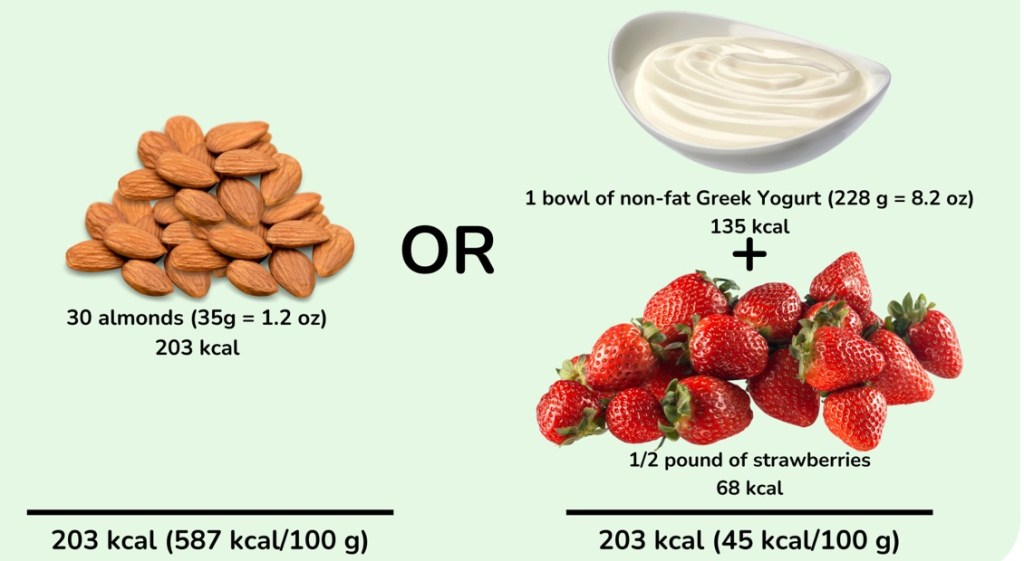
Here is an example of the concept. We all think of raw nuts as a healthy food full of healthy fats and protein, right? But nuts are so energy dense that just a handful is not only high in calories but not very filling.
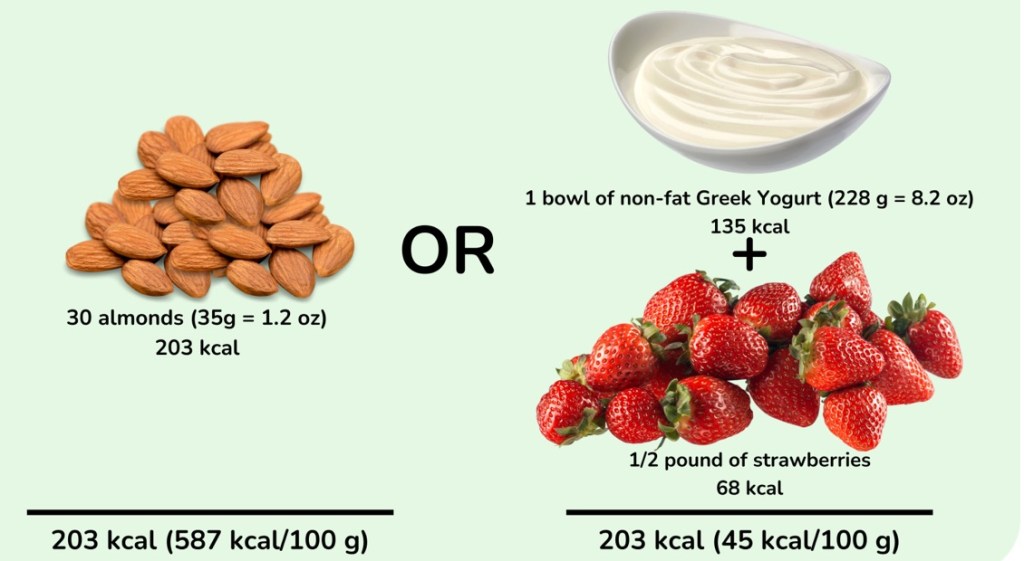
Not all calories are created equal! Which foods you choose to eat matters greatly for both satiety and overall health. For example, calories from foods high in protein can keep you fuller for longer compared to the same number of calories from highly processed foods laden with sugar, salt and fat. In addition, incorporating more high fiber low energy density foods like vegetables, legumes, and some fruits along with your protein will make your meals even more filling.
While the highest-satiety foods may seem obviously healthy to many, quantifying the SPC helps us identify better or worse options from all food available based on individual goals, regardless of which is our preferred way of eating. SPC allows us to move beyond named diets (e.g. keto, plant-based, low-fat, etc.) to compare foods based on their nutritional properties.
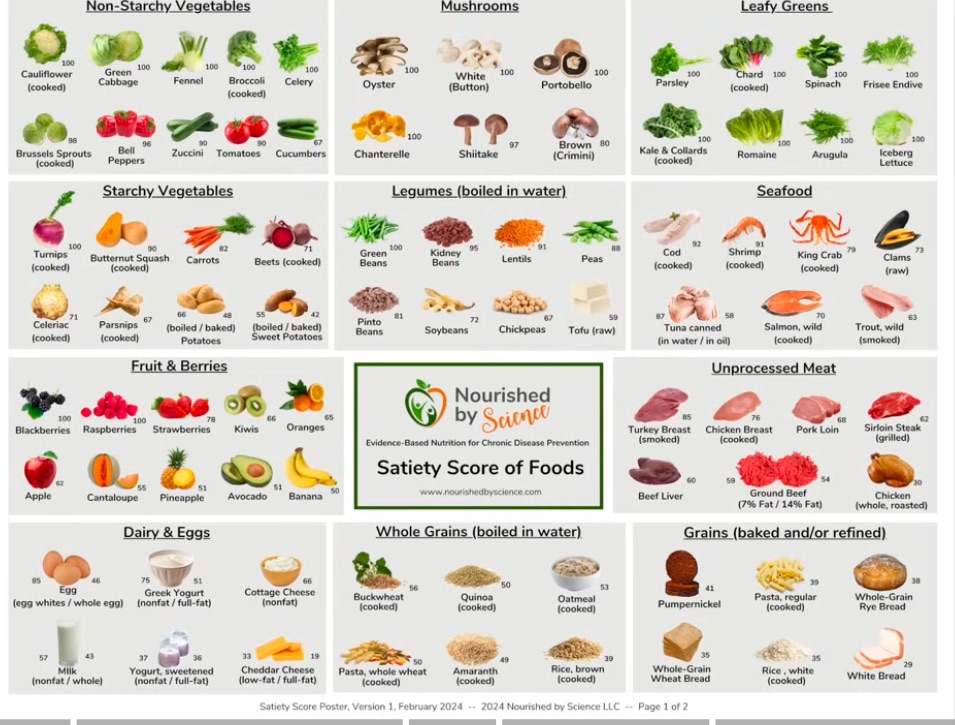
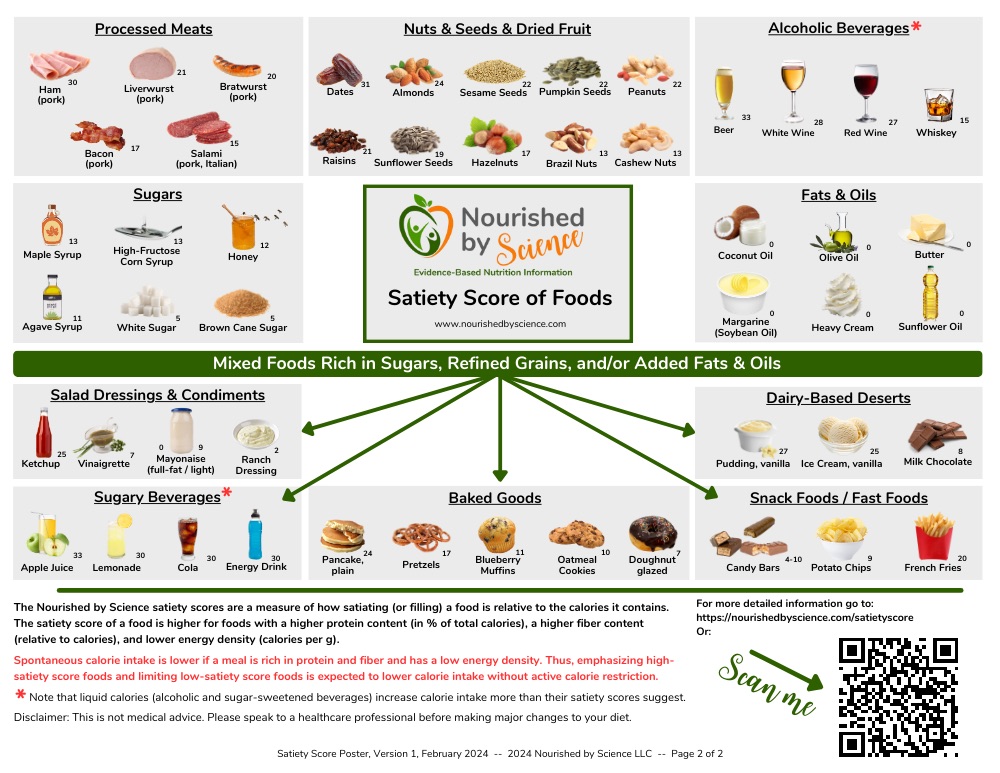
The following graphics are not meant to be something to memorize but to use as a guides to making the healthiest most satisfying food choices for any given caloric intake. Aim for most of your intake to come from foods with SPC scores of 30 and above for healthy weight maintenance and 50 and above if you are trying to lose weight. Eat reasonable portions according to those parameters until you are full without having to weigh or measure your food. Using the satiety scoring system makes calorie counting and tracking unnecessary unless you just want to prove to yourself that you are eating fewer calories automatically because you are satiated! If you are trying to lose weight, your scale and your measurements will tell you if shifting your focus to satiety per calorie is working for you.
Building a high satiety way of eating:
- Prioritize protein at every meal.
- Include foods high in fiber at every meal.
- Include foods with low energy density over high energy density foods.
- Minimize your intake of highly processed foods that are high in sugar, salts and fats.
Building your own personal healthy eating plan with these tips as a guidelines will be far more sustainable in the long run than any strict diet and will even allow you to enjoy the occasional treat without feeling guilty.
If you are interested in a deep dive into the science behind satiety per calorie, or want to find free printable versions of the graphics used in this article visit: https://nourishedbyscience.com/satietyscore/
Be Blessed,
Yvonne Moore
““Dear friend, I hope all is well with you and that you are as healthy in body as you are strong in spirit.”
3 John 1:2 NLT
 ymoore4health
Leave a comment